


By the Gearbly Engineering Team | Reading Time: 12 Minutes
In the rapidly evolving landscape of software architecture, the binary distinction between “developers” and “non-developers” is collapsing. The rise of Low-Code and No-Code (LCNC) platforms has fundamentally altered the velocity at which digital products are deployed.
According to Gartner, by 2025, 70% of new applications developed by organizations will use low-code or no-code technologies, up from less than 25% in 2020. But for technical agencies and forward-thinking enterprises, the question is not if we should use these tools, but how we integrate them without sacrificing architectural integrity, security, or performance.
At Gearbly, we believe in “Precision Engineering.” We view LCNC not as a replacement for code, but as a force multiplier for architectural efficiency. This analysis explores the current state of LCNC, the hidden technical debt often ignored by enthusiasts, and the strategic hybrid frameworks that yield the fastest, most scalable results.
Part 1: Defining the Spectrum – Code vs. Low-Code vs. No-Code
To understand the utility of these tools, we must first strip away the marketing jargon and look at the underlying mechanics.
1. No-Code (The Citizen Developer’s Tool)
- Target Audience: Marketing teams, Founders, Product Managers.
- The Mechanism: Purely visual abstraction. The user interacts with a GUI (Graphical User Interface), and the platform handles 100% of the logic, database structure, and deployment.
- Examples: Bubble, Webflow, Zapier.
- The Gearbly Take: Excellent for prototyping and MVPs (Minimum Viable Products), but often suffers from “Vendor Lock-in” and rigid API limitations.
2. Low-Code (The Engineer’s Accelerator)
- Target Audience: DevOps, Full-Stack Developers, Enterprise Architects.
- The Mechanism: Visual modeling for 80% of the standard CRUD (Create, Read, Update, Delete) operations, but with “escape hatches” that allow developers to inject custom JavaScript, Python, or SQL for complex logic.
- Examples: Retool, OutSystems, Mendix, Microsoft Power Apps.
- The Gearbly Take: This is where the future of enterprise development lies. It allows senior engineers to stop wasting time on boilerplate UI code and focus on complex backend logic.
Part 2: The Titans of the Industry – A Technical Breakdown
Not all platforms are created equal. Here is our analysis of the market leaders based on extensibility, hosting control, and scalability.
1. For Internal Tooling: Retool
Retool has emerged as the gold standard for developers. Unlike typical no-code tools, Retool assumes you know how databases work.
- The Power: It connects directly to your existing PostgreSQL, MySQL, or MongoDB databases.
- The Use Case: Building admin panels, dashboards, and inventory management systems.
- Engineering Verdict: Retool is essential for reducing the time developers spend building internal GUIs. Instead of writing React components for a simple admin table, Retool allows you to drag-and-drop the table and write a simple SQL query to populate it.
2. For Web Architecture: Webflow vs. WordPress FSE
While Webflow generates clean, semantic HTML/CSS, it remains a closed ecosystem. For agencies like Gearbly that prioritize data ownership, WordPress (specifically the new Full Site Editing or FSE capability) remains the superior “Low-Code” choice.
- The Hybrid Approach: Using modern WordPress block themes (like Blocksy or Bricks Builder) allows for a visual design experience similar to Webflow, but retains the ability to extend functionality via PHP and custom database tables. This offers the speed of No-Code with the infinite extensibility of Open Source.
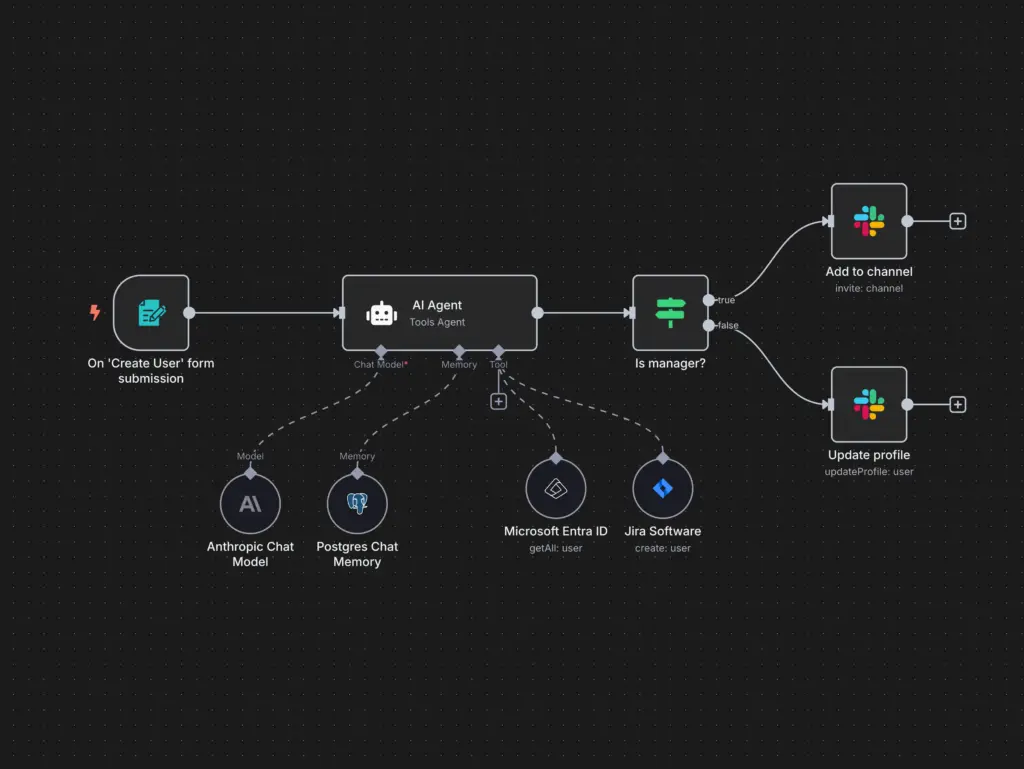
3. For Logic & Automation: n8n vs. Zapier
While Zapier is the household name, n8n represents the “Developer’s Choice.”
- The Distinction: n8n is source-available and self-hostable.
- Why It Matters: For a server-focused agency using tools like CloudPanel or Docker, n8n allows you to run automation workflows on your own infrastructure. This eliminates the data privacy concerns and per-task pricing models of SaaS alternatives. It is the perfect bridge between visual automation and custom Node.js scripting.
Part 3: The Hidden Costs – What the Vendors Don’t Tell You
As engineers, we are trained to look for failure points. While LCNC offers speed, it introduces specific types of Technical Debt that must be managed.
1. The “Visual Spaghetti” Phenomenon
In traditional code, we have design patterns (MVC, Singleton, Factory) to keep logic organized. In No-Code, logic is often scattered across hidden menus, visual nodes, and trigger settings. As an application grows, debugging a complex Bubble workflow can be significantly harder than debugging a well-structured Python script.
2. The Performance Ceiling
Abstraction layers always come with a performance cost. A native React application optimized by a senior engineer will almost always outperform a generated No-Code app in terms of load time and DOM size.
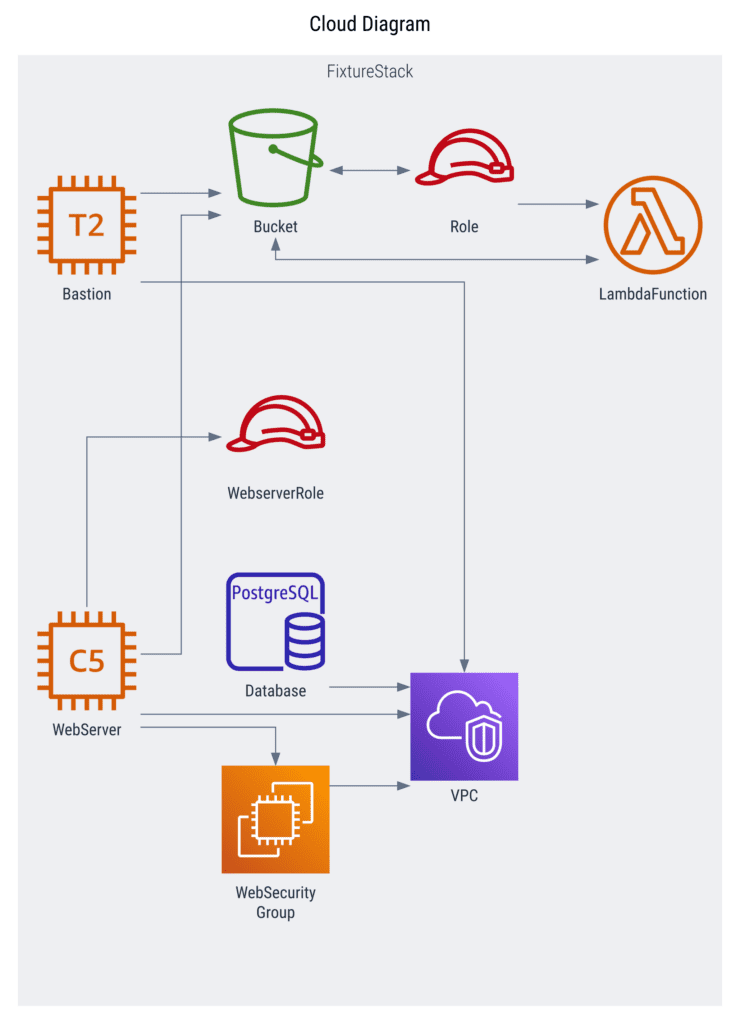
- The Solution: Use LCNC for the “heavy lifting” of the UI, but offload complex data processing to external microservices (e.g., a custom Python script running on an AWS Lambda function or a DigitalOcean droplet).
3. Vendor Lock-In and Data Sovereignty
When you build on a proprietary platform like Salesforce Lightning or Bubble, you do not own the source code. If the platform raises prices or goes out of business, your migration path is non-existent.
- The Gearbly Strategy: We advocate for Open Core Low-Code. Use tools that generate standard code (like FlutterFlow for mobile, which exports real Flutter code) or tools that sit on top of your own SQL databases (like Retool or Budibase).
Part 4: The Gearbly Framework – A Hybrid Approach to Development
How do we leverage these tools while maintaining “Precision Engineering”? We utilize a Hybrid Architecture that combines the speed of Low-Code with the power of High-Code.
Layer 1: The Visual Frontend (Speed)
For marketing sites, landing pages, and simple internal dashboards, we utilize visual builders.
- Tools: WordPress (Gutenberg/Blocksy), Retool.
- Benefit: Rapid iteration. Clients can make text/image changes without touching code.
Layer 2: The Logic Middleware (Connectivity)
To connect disparate systems, we use workflow automation tools, but we prefer those that allow code injection.
- Tools: n8n (Self-Hosted), https://www.google.com/search?q=Make.com.
- Benefit: Handling API handshakes and data formatting without writing boilerplate cURL requests.
Layer 3: The “High-Code” Core (Power)
This is where the “Ability” in Gearbly shines. For unique business logic, heavy data processing, or complex algorithms, we write raw code.
- Tools: Python (Data processing), Node.js (Real-time events), Raw SQL.
- Benefit: When performance creates value, we drop down to the metal.
Part 5: The Future – AI as the Ultimate Low-Code Tool
The conversation around LCNC is shifting due to the emergence of Large Language Models (LLMs) like GPT-4 and GitHub Copilot.
Text-to-Code is the new No-Code. Instead of dragging visual nodes, developers can now describe a function in natural language, and the AI generates the Python or PHP code. This is arguably superior to visual Low-Code because the output is standard code that can be version-controlled, reviewed, and optimized.
At Gearbly, we are integrating AI-assisted coding into our workflows. This allows us to maintain the flexibility of custom code while achieving the development velocity of a No-Code platform.
Conclusion: Choosing the Right Gear for the Machine
The rise of Low-Code tools is not a threat to the engineering profession; it is an evolution of the toolset. Just as an architect moved from drafting tables to CAD software, today’s developers are moving from writing every line of HTML to orchestrating powerful pre-built components.
For businesses, the key is discernment.
- Building a generic marketplace? Use a No-Code template.
- Building a proprietary algorithm or a high-security fintech platform? You need Custom Engineering.
- Scaling a mid-sized agency? You need a Hybrid Solution—the “Gearbly” approach.
Ready to modernize your infrastructure? Whether you need a rapid Low-Code prototype or a robust, custom-coded server environment, Gearbly provides the architectural precision to ensure your digital assets are built to last.
Contact our Engineering Team to discuss your stack.
🔒 Is your server actually secure? Don’t leave your infrastructure vulnerable. Download our internal 50-Point Security Checklist (The Fortress Protocol) to see the exact steps we use to harden client servers.
References & Further Reading
- Gartner Research: “Magic Quadrant for Enterprise Low-Code Application Platforms,” Gartner.com
- Stack Overflow Developer Survey 2024: “Trends in Professional Tooling,” StackOverflow.com
- Forrester Wave: “Low-Code Development Platforms For Professional Developers,” Forrester.com
- n8n Documentation: “Self-Hosting & Docker Deployment,” Docs.n8n.io
This article was published by Gearbly, a boutique agency specializing in WordPress development, Server Administration, and Custom Automation.